AI Security Posture Management (AI-SPM) Buyer’s Guide

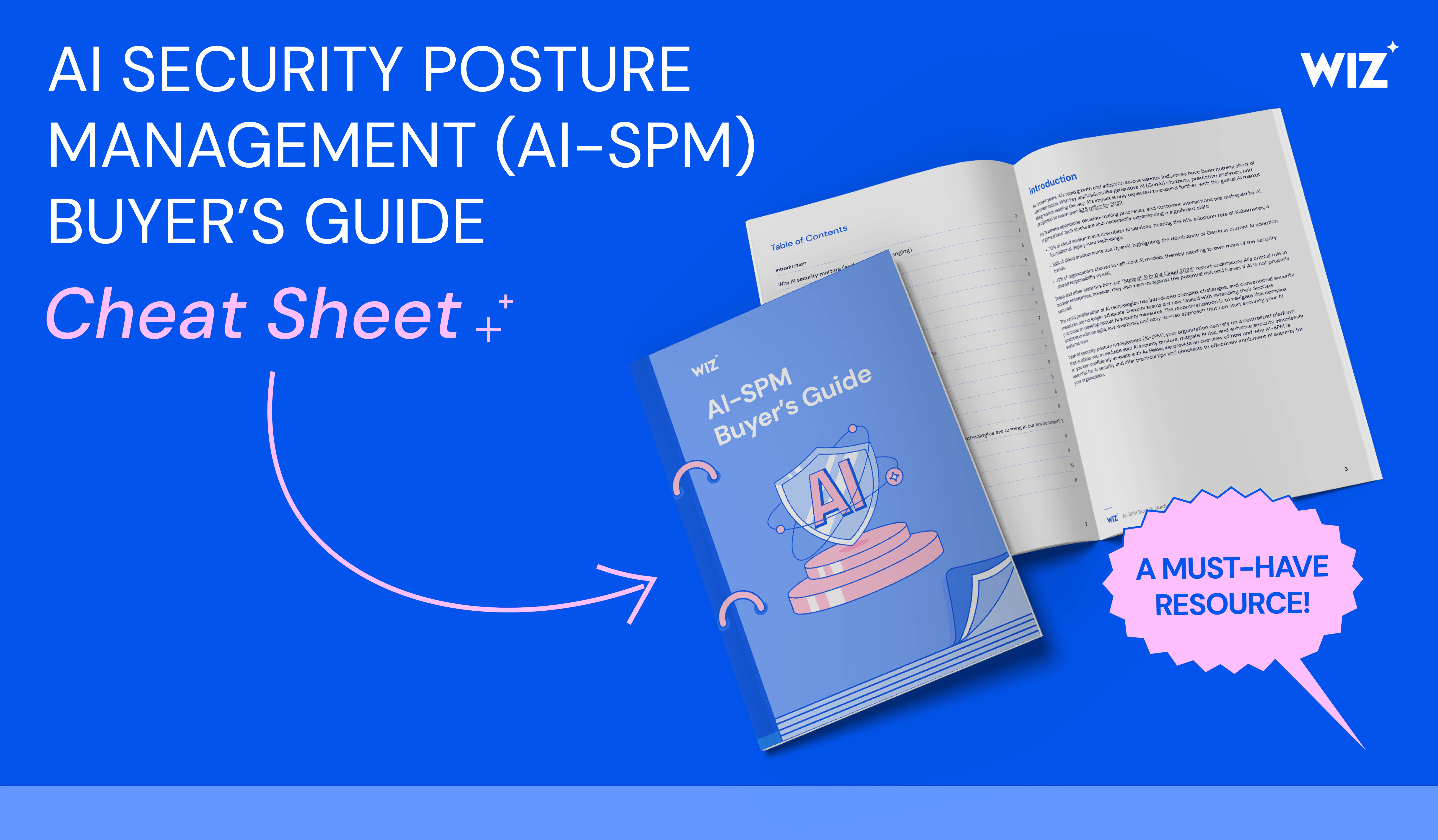
Download Guide
Key Takeaways
- 1. AI security is not just “cloud security with extra steps”AI systems behave differently from traditional software — they’re non-deterministic, trained on sensitive data, rely heavily on third-party models/services, and expose novel attack paths like model theft, adversarial inputs, prompt-driven data exfiltration, and shadow AI.
- 2. Visibility is the foundational blockerAI adoption is fragmented: self-hosted models, managed AI services, Bedrock/OpenAI integrations, embedded AI inside SaaS, experimental models in notebooks, and shadow GenAI tools.
- 3. AI-SPM isn’t a niche add-onThe guide argues that AI-SPM must sit at the center of AI governance: discovering pipelines, correlating AI risks with cloud context, detecting misuse, prioritizing attack paths to models/data, enabling incident response, and supporting compliance.
Who this guide is for
This buyer’s guide is designed for organizations that are adopting AI and need to secure it responsibly. It’s especially relevant for:
Security leaders (CISO, Head of SecOps) who need a framework to define AI security strategy and reduce organizational risk as AI adoption accelerates.
Cloud security and platform teams who manage the infrastructure, pipelines, and services that AI depends on, and need visibility into AI-specific risks.
AI/ML engineers and data scientists responsible for building models, handling training data, and maintaining AI systems — but who need security guardrails.
Compliance, risk, and governance teams who must ensure AI use aligns with rapidly evolving regulations and internal policies.
Engineering leaders introducing GenAI into apps or workflows who need to ensure AI ships securely and resiliently.
What’s included
A complete breakdown of the emerging AI security landscape and the capabilities required to secure AI environments, including:
Why AI security is uniquely challenging
Covers complexity, non-determinism, privacy risks, lack of standardization, and new attack surfaces.
The full spectrum of AI risks
Includes classic threats (data breaches, DoS, supply chain risks) and AI-specific threats (model theft, adversarial attacks, shadow AI).
A clear definition of AI-SPM and why it matters
Explains AI-BOM, contextual risk analysis, threat detection, integration with cloud context, and protection for training data, models, and pipelines.
Benefits of adopting AI-SPM
Unified visibility, faster time-to-production, effective risk reduction, improved incident response, simplified compliance, and stronger collaboration.
Self-assessment checklists
Detailed questions to evaluate readiness across visibility, risk identification, risk prioritization, and threat detection in AI pipelines.
Get a personalized demo
Ready to see Wiz in action?
"Best User Experience I have ever seen, provides full visibility to cloud workloads."
"Wiz provides a single pane of glass to see what is going on in our cloud environments."
"We know that if Wiz identifies something as critical, it actually is."