What is data security compliance?
Data security compliance is the practice of aligning with legal, regulatory, and industry standards to protect sensitive data across on-prem, cloud, hybrid, and AI environments. This discipline has become increasingly complex due to a combination of factors, including the rapid adoption of cloud and multi-cloud services, the swift growth of AI services, stricter global data privacy laws, and heightened regulatory enforcement.
While compliance is often driven by external requirements, its strategic value extends far beyond audits. When done right, it reduces manual reporting overhead, strengthens operational resilience, accelerates M&A integration, and enables security teams to communicate measurable success to the board. At its core, compliance ensures that you're not only avoiding penalties but also proactively safeguarding the business, which builds trust with customers and enables secure innovation at scale.
The Data Security Best Practices [Cheat Sheet]
No time to sift through lengthy guides? Our Data Security Best Practices Cheat Sheet condenses expert-recommended tips into a handy, easy-to-use format. Get clear, actionable advice to secure your cloud data in minutes.
Download cheat sheetData compliance vs. data security compliance: Key differences
For compliance teams, the focus often falls on data governance—what data they have, where it came from, and how they manage it. For security teams, the priority shifts to protecting that data from threats and breaches.
While both groups share the broader goal of responsible data management, their strategic priorities and day‑to‑day mandates often differ, making clear alignment essential. Here are some key differences between the two:
| Aspect | Data compliance | Data security compliance |
|---|---|---|
| Primary scope |
|
|
| Key questions |
|
|
| Main actors |
|
|
| Typical KPIs |
|
|
| Interdependency |
|
|
Although data security compliance is a subset of data compliance, both disciplines intersect constantly. For example, successful compliance programs rely on close collaboration between compliance and security teams to effectively translate regulatory obligations into effective technical controls.
Why is data security compliance important to business?
IBM’s Cost of a Data Breach 2025 report found that the global average cost of a data breach had declined to $4.44 million, marking the first drop in five years, partly due to faster identification and containment of breaches.
Non-compliance not only amplifies breach costs but also jeopardizes brand trust, legal standing, and business continuity. For CISOs, CIOs, and CTOs, that translates to increased risk exposure, prolonged recovery timelines, and intensified regulatory scrutiny.
In highly regulated sectors, compliance-related costs often surge after the first year following a breach. Conversely, organizations in lower-regulation environments typically resolve a majority of these costs within that time frame. Exploited risks directly affect share value, operational stability, and long-term competitiveness, which makes proactive compliance a critical priority at the executive level.
Here are six critical reasons why data security compliance is essential:
Evolving threat landscape: Threat actors continue to escalate attacks, including ransomware targeting, the use of AI pipelines, and exploiting insider access through SaaS sprawl. According to the FBI’s 2024 Internet Crime Report, the agency processed reports claiming $16.6 billion in losses from cybercrime.
Cloud compliance: Most organizations operate across multi-cloud or hybrid environments. That’s why navigating the shared responsibility model (especially when working with IaaS, PaaS, and SaaS providers like AWS and Azure) adds complexity to compliance efforts.
New laws and regulations: Governments are implementing new rules to address industry-specific risks and the surge in cybercrime. Enterprises must understand how these new regulations interact with existing ones and how to adjust their security controls accordingly.
Complex data ecosystems: As enterprises expand their data operations, shadow data becomes more prevalent. Complex ecosystems require more robust controls to ensure compliance without compromising agility.
DevOps initiatives: Accelerated development and deployment cycles increase the risk of data exposure. Without integrated compliance checks in CI/CD pipelines, data exposure and misconfigurations can propagate quickly through automated releases.
International data projects: Cross-border data flows complicate compliance, as businesses must align with overlapping or contradictory rules across different jurisdictions.
Real-life example: The cost of non-compliance
In May 2023, Meta faced a record fine of $1.3 billion from the Irish Data Protection Commission. EU regulators ruled that the company had systematically, repetitively, and continuously transferred personal data of EU users to the United States without sufficient protection under the General Data Protection Regulation (GDPR).
This violation stemmed from inadequate safeguards for transatlantic data transfers. It serves as a key example of how noncompliance with GDPR can lead to severe penalties and reputational damage. Any organization handling EU personal data must proactively manage this risk.
13 key data security regulations and standards
Several regulations, frameworks, and standards form the backbone of global data security and management compliance. The following 13 examples are critical to understand so you can protect sensitive data and avoid costly penalties:
| Name | Region/scope | Focus area | Description |
|---|---|---|---|
| GDPR | EU and global | Data privacy and personal data control | Empowers users to control their personal data |
| SOX | US | Financial data transparency and integrity | Enforces corporate accountability and internal controls |
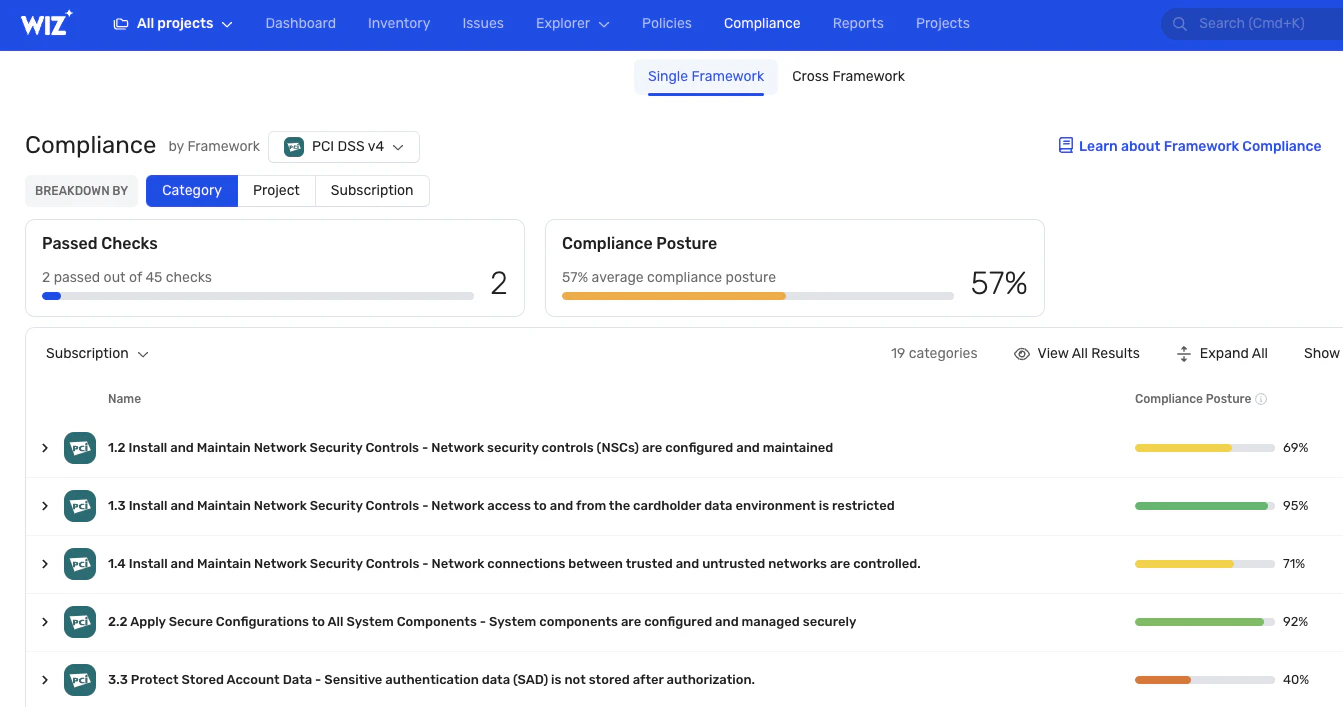
| PCI DSS | Global | Credit card and payment data protection | Noncompliance costs up to $100,000 per month, depending on the card network |
| CCPA | US (California only) | Consumer data rights and control | Grants the right to access, delete, and opt out of data sales |
| HIPAA | US | Healthcare data (ePHI) protection | Applies to healthcare providers, payers, and associates |
| FISMA | US | Federal information system security | Mandatory for federal agencies and contractors that implement security programs that comply with NIST standards like SP 800‑53 |
| PIPEDA | Canada | Private-sector personal data regulation | Covers how businesses collect, use, and disclose data |
| ISO/IEC 27001 | International | Information security management systems | Includes a framework for securing sensitive information |
| ISO/IEC 27701 | International | Privacy information management systems | Extends ISO 27001 to cover personal data processing |
| NIST Cybersecurity Framework | US | Risk-based approach to cybersecurity | Common in critical infrastructure and private industry |
| SOC 2 | US | Attestation report for security, availability, confidentiality, and privacy | Often for SaaS providers and cloud services |
| AI and algorithmic regulations | EU (AI Act) and global | Responsible AI use, transparency, and fairness for governance | Focuses on explainability and compliance for AI systems |
| Regional frameworks (APAC, LATAM) | APAC and LATAM | Data sovereignty, cloud security, and compliance | Includes country-specific rules growing around AI data processing, cloud, governance, and data sovereignty |
10 practical steps for achieving data security compliance
To keep pace with rapidly evolving regulatory demands and expanding attack surfaces, organizations must take clear, concrete actions to align with legal and industry standards. This involves understanding your responsibilities, applying the right frameworks, and accounting for technologies like AI that introduce new risks and challenges.
Here are 10 practical steps to strengthen data security compliance by focusing on audit readiness, accelerating response times, and automating controls across modern cloud and AI environments:
1. Understand regulatory requirements
To avoid costly penalties, maintain customer trust, and stay compliant with evolving legal standards, organizations need a clear understanding of which regulations apply to their operations and how to meet them. Follow these best practices to align with applicable rules and frameworks:
Identify applicable regulations: Determine which laws apply to your business based on its sector and geography (such as GDPR, HIPAA, CCPA, or PCI DSS) to effectively protect your data.
Address AI-specific regulations: Assess and continuously monitor regulations that govern transparency, fairness, and responsible data use in algorithmic decision-making, such as the EU AI Act.
Adopt industry frameworks: Use recognized security frameworks, such as ISO 27001, the NIST Cybersecurity Framework, or SOC 2, to standardize your compliance efforts and simplify audit readiness and reporting.
2. Gain data visibility
Visibility isn’t just about knowing where your data resides, but having the ability to take action. With the right visibility, you can generate audit trails on demand, enforce SLAs, and resolve compliance findings faster.
Here are a few additional actions you can take to strengthen your data discovery and classification for compliance:
Discover all data: Identify and map sensitive or regulated data across your environment using discovery tools.
Include AI datasets: Ensure AI datasets are accounted for in your discovery process, as AI models rely on massive data inputs for training.
Classify automatically: Classify data (e.g., PII, financial) by sensitivity to streamline protection and compliance tracking.
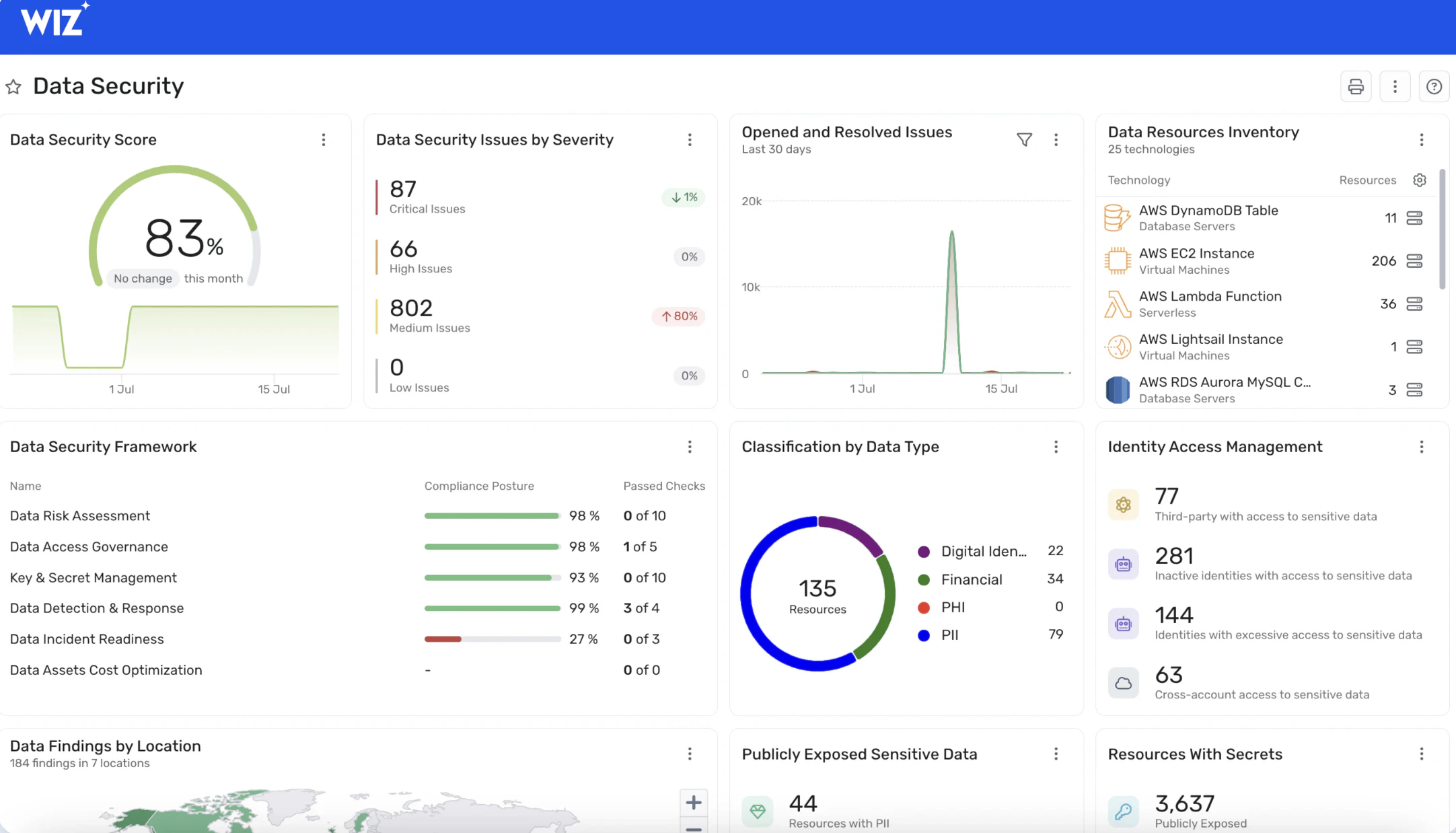
Maintain visibility: Use DSPM to monitor data flows and surface risks continuously, including across AI pipelines.
3. Catalog and manage data
To meet compliance requirements, particularly in complex environments involving AI, you need a centralized and dynamic view of your data. Cataloging data and tracking its context enables teams to apply policies consistently and demonstrate compliance during audits.
Below are some key practices for effective data cataloging and management:
Data catalog implementation: Establish a data catalog to create an inventory of all data assets. The catalog should provide an organized, searchable index of all your datasets, including sensitive information and AI-specific data in model training or decision-making.
Metadata management: Track the origin, usage, and governance rules of data, especially for datasets that feed AI models, to establish an audit trail for regulatory compliance.
Tag sensitive data: Apply appropriate tags to data based on its sensitivity and regulatory requirements. This tagging should cover both traditional data and datasets in AI workflows.
Automated updates: Make sure you update the data catalog whenever new data enters the system or when modifications occur. For AI applications, this means keeping an updated record of all datasets, inputs, and outputs.
4. Track data lineage and traceability
Regulations are increasingly demanding visibility into how organizations collect, use, and modify data throughout its lifecycle. With the emergence of new threats and privacy concerns, this is especially true for AI systems.
Tracking data lineage and ensuring traceability across pipelines allows for accountability, transparency, and improved risk management. Focus on the following tactics:
Data lineage tracking: Track how data moves within your systems, from collection to processing and storage, to prove compliance and establish an auditable record for every AI-driven decision.
AI traceability: Verify that AI models and their datasets are fully traceable, particularly in compliance-critical sectors (e.g., finance or healthcare), to safeguard against potential privacy violations.
5. Apply encryption and access controls
Compliance frameworks require that you restrict access and protect sensitive data in motion and at rest. These controls are essential pillars of standards like PCI DSS, HIPAA, and ISO 27001. Encryption and access management support these objectives across both traditional infrastructure and AI model environments. Here’s what to implement for better controls:
Encryption: Encrypt data both at rest and in transit. For AI applications, ensure that training data and any outputs containing sensitive information are also encrypted.
Access control: Implement role-based access control and least privilege access to limit who can access sensitive data. For AI systems, ensure that only authorized personnel can access training data, models, and outputs.
Multi-factor authentication (MFA): Require MFA for access to systems that handle sensitive data, including AI model training environments and tools.
6. Enforce minimization, masking, and anonymization
Minimizing the amount of sensitive data you collect and store helps reduce risk and simplifies compliance. This principle is especially relevant when building or training AI systems, as it protects data and ensures proper use and application. Here are methods to help you reduce risk and simplify compliance:
Data minimization: Collect and store only the minimum amount of data necessary for your operations and AI model training. Use synthetic data or anonymized data whenever possible to minimize privacy risks.
Anonymization and pseudonymization: Apply anonymization techniques to remove personally identifiable information (PII) from datasets in AI training or other data processes, ensuring compliance with privacy laws.
7. Secure AI and algorithmic workflows
AI introduces unique compliance and security challenges that extend beyond traditional systems (e.g., model manipulation, explainability, and adversarial attacks). Tailored controls are necessary to ensure AI remains secure and compliant. Consider these key safeguards:
Secure AI models: Verify your AI models are resilient against adversarial attacks, where malicious inputs manipulate model behavior. Strengthen defenses by conducting adversarial testing, validating training data, and monitoring model behavior for anomalies.
Data poisoning protection: Ensure that datasets used to train AI models are secure and monitored to prevent data poisoning attacks, which can compromise AI outputs and lead to non-compliance.
Model governance and explainability: Verify that AI models in sensitive sectors, such as healthcare or finance, have mechanisms for explainability and auditability to maintain trust and compliance with regulatory standards.
8. Continuously monitor risk and audit data activity
To meet compliance obligations and minimize risk, organizations must move beyond periodic checks and adopt continuous monitoring. Real-time visibility and auditing (especially for AI data pipelines) enable quick detection, investigation, and response to incidents. Implement the following practices to maintain control over sensitive data environments:
Exercise continuous monitoring: Monitor data access, movement, and usage across systems in real time. Use cloud-native solutions (like a CNAPP that offers DSPM) to gain visibility into all data flows, including those involving AI data pipelines.
Audit AI models: Periodically audit AI systems, protecting the integrity of the models and the data they rely on. Include training data audits to verify that models and information management meet security and compliance standards.
Data logging: Maintain detailed logs of data access and usage. For AI, ensure that you keep logs of those who accessed training datasets, including which models were trained on which dataset and the decisions or outputs generated.
Incident response plan: Develop a well-defined incident response plan that includes AI-specific breach scenarios. Align your plan with regulatory requirements by detailing roles, responsibilities, and timelines for breach notification (e.g., GDPR’s 72-hour rule). Additionally, include documentation workflows to support post-incident audits and compliance reporting.
9. Automate compliance testing and reporting
As organizations scale, manual compliance tracking becomes error-prone and resource-intensive. Automating testing and reporting streamlines operations, reduces risk, and enhances audit readiness. Frameworks such as ISO 27001 and SOC 2 encourage the use of automation for evidence collection. Here are testing and reporting processes you can add:
Automated controls testing: Continuously verify whether technical safeguards align with defined compliance requirements so you maintain healthy security.
Integrated reporting tools: Quickly generate audit-ready reports that demonstrate compliance posture across systems, including AI environments, making them easy to provide to regulatory agencies and use for internal posture analysis.
Real-time alerts: Instantly detect and flag deviations from policy, enabling teams to act before minor issues escalate into major violations.
10. Validate with pen tests and simulations
No compliance strategy is complete without testing your defenses. Validation prepares your systems and teams for real-world attacks and compliance lapses. Below are ways to validate your environment:
Penetration testing: Regularly assess infrastructure and applications for exploitable vulnerabilities, meeting the requirements of PCI DSS, SOC 2 Type II, and ISO 27001 control A.12.6.1.
AI-specific simulations: Conduct red team exercises that target AI model pipelines to identify risks frequently overlooked by traditional controls.
Drills and incident simulations: Test incident response capabilities to verify your team can effectively manage compliance-related breaches or failures.
Common challenges and pitfalls in data security compliance
For organizations operating in hybrid and multi‑cloud environments, navigating data security compliance poses a distinct set of operational and technical hurdles. These environments often amplify risks like misconfigurations, inconsistent controls, and fragmented visibility, which can lead to regulatory violations if not addressed proactively. The table below outlines key challenges with practical solutions to help you balance innovation speed and governance control:
| Challenge | How it happens | Suggested solution |
|---|---|---|
| Shadow IT and siloed systems | Business units bypass approved tools or spin up unsanctioned cloud services, creating blind spots and compliance gaps. | Deploy discovery tools to identify unauthorized assets, enforce clear SaaS onboarding workflows, and train stakeholders on approved platforms. |
| Legacy technology and misconfigurations | Older systems often lack modern controls, and misconfigurations in cloud or hybrid environments can expose data and increase the risk of fines. | Conduct regular audits of legacy systems, apply cloud-native configuration monitoring tools, and enforce secure configuration baselines. |
| Scaling issues as cloud footprint grows | Rapid cloud adoption and multi‑cloud usage increase complexity and visibility gaps, making it difficult to enforce compliance consistently. | Use unified posture management tools across all clouds, maintain standardized policies, and build skills that cover multi-cloud operations. |
These challenges reflect the tension between the need for speed (to innovate and deploy quickly) and the need for governance (to stay secure and compliant). Addressing each one proactively is essential to support both agility and compliance in your organization’s data strategy.
Real-life example: How Ledger automates compliance with Wiz
Cryptocurrency and blockchain companies are navigating the fast-paced world of compliance regulations worldwide. Recognizing that it’s impossible to manage these complexities alone, blockchain security company Ledger adopted Wiz to centralize and automate compliance across its growing multi-cloud environment.
In light of strict financial data regulations, Ledger leveraged Wiz to gain full visibility into its cloud and data environments, prioritize risks, and integrate security checks earlier in the development lifecycle. Using Wiz’s DSPM, Ledger can continuously monitor for policy violations and protect its sensitive customer data, including cryptocurrency transactions and PII, before deployment.
How Wiz can help with your data security compliance
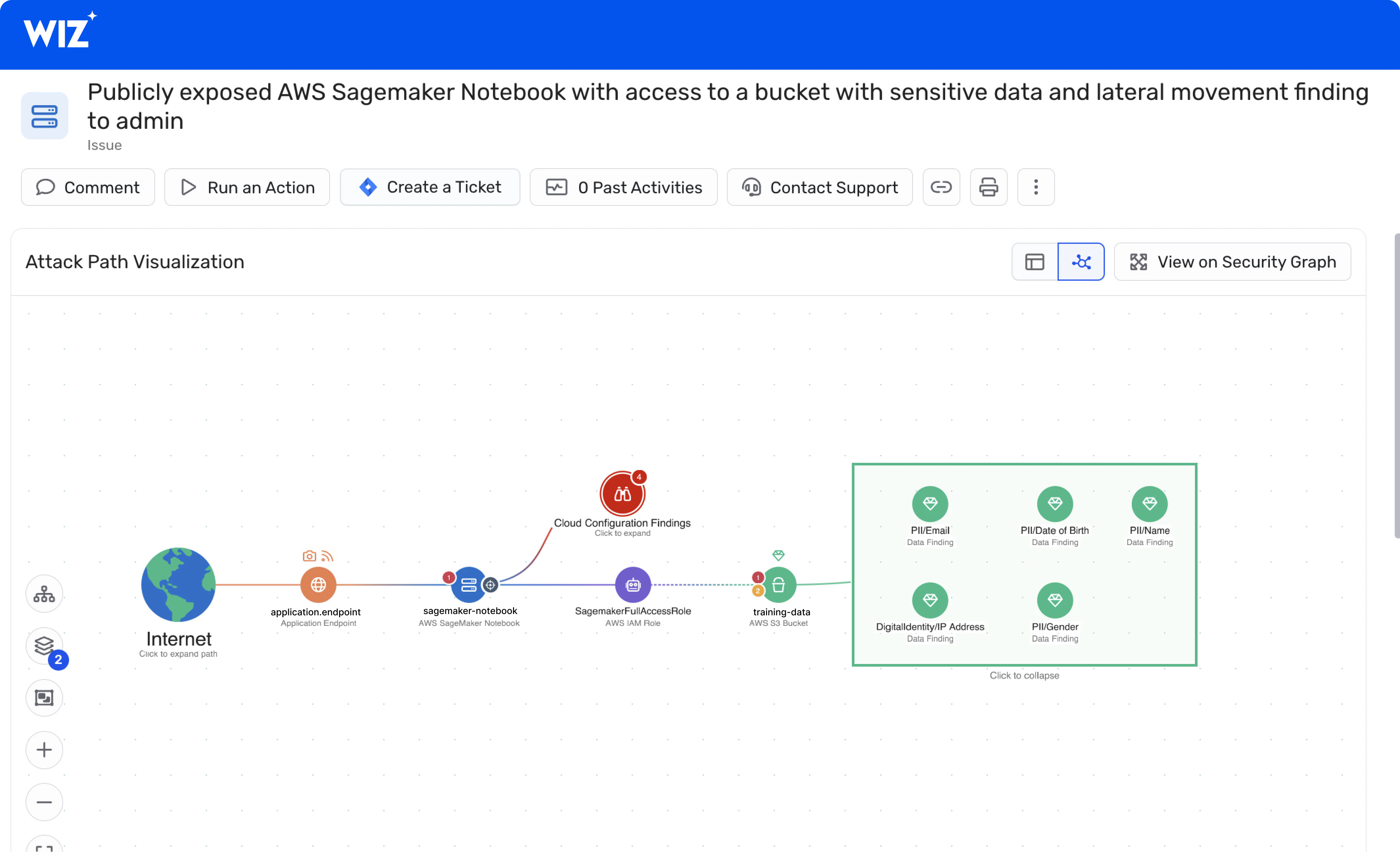
Wiz’s DSPM solution empowers enterprises to scan their entire data landscape without deploying agents. It prioritizes risks using deep contextual insights, preventing exposure by identifying toxic combinations and vulnerable attack paths. We also extend these capabilities to AI datasets, ensuring security for one of today’s highest-risk and fastest-evolving data categories.
With broad support for major cloud platforms and technologies, Wiz unifies data security across complex environments, helping organizations stay ahead of evolving privacy laws and compliance requirements—regardless of complexity.
What to look for in a compliance solution like Wiz
Security leaders need compliance solutions that deliver visibility, automation, cross-cloud coverage, and AI readiness, all while driving measurable ROI. Wiz meets these priorities with the following features:
Unified visibility across cloud environments for faster audits and reduced blind spots
Automated compliance reporting that cuts manual effort and saves time
Scalable governance across AWS, Azure, GCP, and hybrid environments
Request a demo today to learn how Wiz can protect your data and future-proof your compliance strategy.
Protect your most critical cloud data
Learn why CISOs at the fastest companies choose Wiz to secure their cloud environments.
FAQ
Below are some popular questions about data security compliance: