


What is cloud compliance?
Cloud compliance refers to the procedures, controls, and organizational measures that ensure your cloud-based assets meet applicable data protection regulations, industry standards, and internal security frameworks. This means aligning how you store, process, and transmit data across AWS, Azure, Google Cloud, and other environments with requirements like GDPR, HIPAA, PCI DSS, SOC 2, and NIST SP 800-53.
Unlike traditional on-premises compliance, cloud compliance introduces a shared accountability model between your organization and your CSP. Your CSP secures the underlying infrastructure. You control configurations, access policies, and data handling.
Guide to Data Governance & Compliance in the Cloud
This Guide to Data Governance and Compliance in the Cloud provides a straightforward, 7-step framework to help you strengthen your cloud governance approach with confidence.

Cloud compliance vs. cloud governance
Cloud governance and cloud compliance serve different but connected purposes:
Governance defines the internal policies, decision-making frameworks, and resource guidelines your organization uses to manage cloud services. It sets the direction.
Compliance demonstrates that your organization actually follows external regulations and internal policies through evidence, audits, and technical controls. It validates execution.
Think of governance as the rulebook you write and compliance as the proof you show auditors that you followed it.

Why cloud compliance matters
Cloud compliance is how you demonstrate to regulators, auditors, and customers that you protect data the way you claim. Without that proof, deals stall, audits drag on, and security teams spend cycles collecting manual evidence rather than reducing meaningful risk.
It also reduces real risk. The same failures that break compliance, like public storage buckets, weak identity controls, and missing encryption, tend to break security too. The overlap between compliance failures and security incidents is not coincidental. Both stem from configuration drift, unclear ownership, and insufficient visibility.
AI security compliance
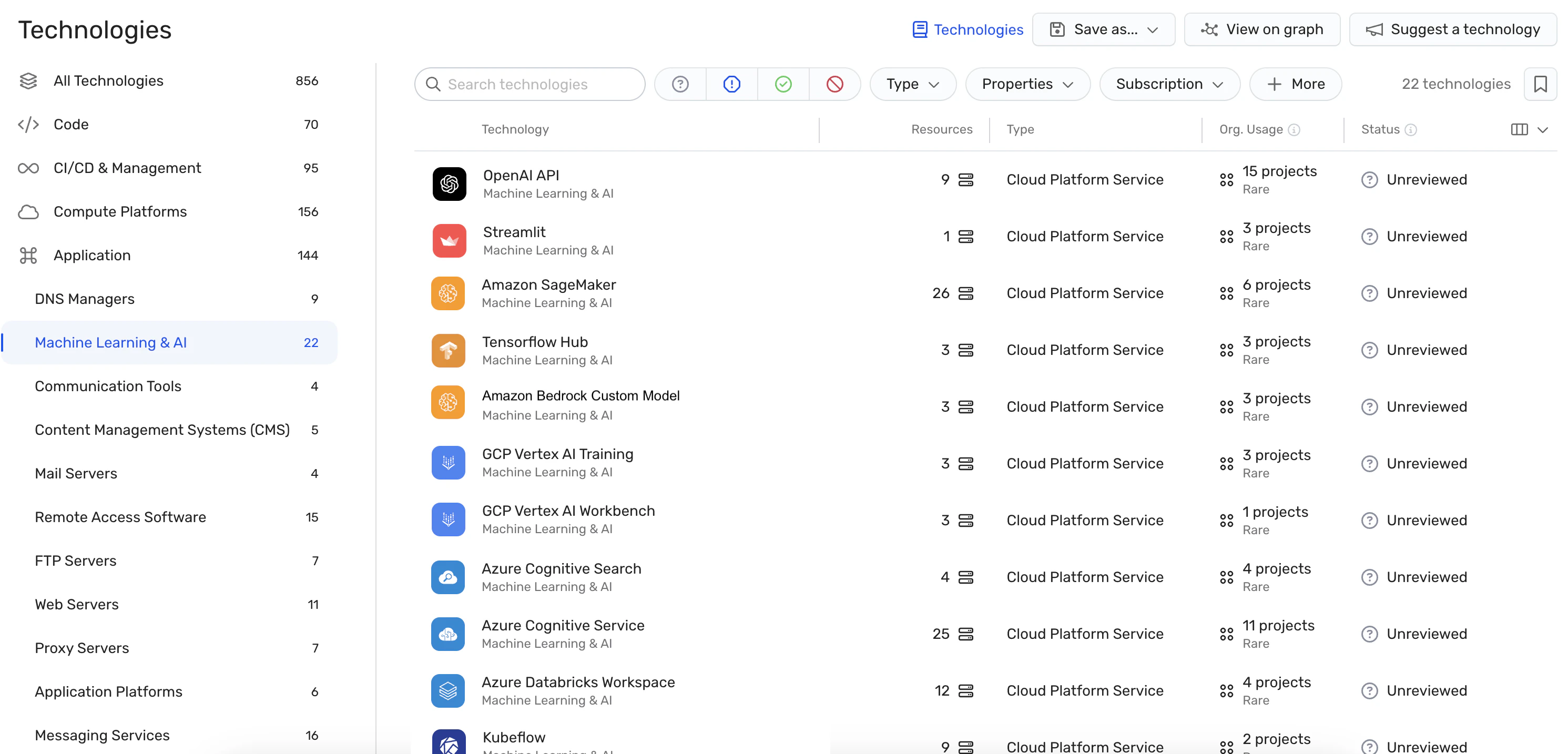
AI adoption adds a new layer of complexity to cloud compliance. Training, fine tuning, or serving models on cloud infrastructure introduces new data flows, residency questions, and accountability obligations that most organizations are only beginning to map.
The EU AI Act now imposes obligations on GPAI model providers, including:
Technical documentation and training-content summaries
Copyright policies
Risk mitigation and incident reporting (for systemic-risk models)
Most high-risk AI system obligations apply from August 2, 2026, with some product-related systems following on August 2, 2027.
Data residency adds another wrinkle. Cross-region data flows may trigger GDPR transfer obligations or local sovereignty laws, even when infrastructure sits in the EU. The EU AI Act doesn't mandate EU-only residency, but its documentation, logging, and governance requirements are far easier to meet when data and model operations stay under clear jurisdictional control from day one.
The EU AI Act is only the beginning. Other frameworks are rapidly taking shape:
As these standards multiply globally, AI security complexity will only grow — making a CNAPP like Wiz essential for keeping pace with evolving threats while maintaining compliance.
Who is responsible for cloud compliance?
Cloud compliance does not belong to a single team. It distributes ownership across your organization and your CSP through the shared responsibility model.
Under this model, your CSP handles security of the cloud: physical data centers, the hypervisor layer, core networking, and underlying compute.
Your organization handles security in the cloud: the operating systems you configure, the IAM policies you set, the data you store, and the workloads you deploy. Misconfigurations at the customer layer drive the vast majority of real-world failures.
Within your organization, responsibility is also distributed across functions. Here’s what that looks like.
Security teams set policy and monitor posture.
Developers own the resources they provision.
Platform teams manage guardrails.
Compliance and legal teams translate regulatory language into technical requirements.
The risk emerges when these boundaries blur, such as when a developer who provisions a storage bucket without inheriting the correct access controls creates a gap that the security team may not discover for days.
Modern compliance management approaches address this by routing compliance alerts directly to the teams that own the affected resources. When the person who made the change is accountable for the fix, remediation happens faster and recurrence drops.
What is a Director of Compliance in cloud security?
Director of compliance leads regulatory adherence, risk management, and security governance to ensure consistent policy application and audit readiness.
Read more
Essential cloud compliance frameworks and regulatory standards
The frameworks that apply to your organization depend on your industry, the data you handle, and the regions where you operate. Some carry legal mandates, others reflect contractual requirements from customers or partners, and some signal security maturity to the market. The table below provides a quick comparison of the six frameworks most relevant to cloud environments.
| Framework | Applies to | Territorial scope | Mandatory? |
|---|---|---|---|
| GDPR | Any org processing data of EEA residents | Global | Yes |
| HIPAA | Healthcare providers, insurers, billing services | US | Yes |
| SOC 2 | SaaS vendors and orgs storing sensitive customer data | Global (primarily US) | Voluntary |
| PCI DSS | Any org accepting or processing card payments | Global | Contractual |
| NIST SP 800-53 | Federal agencies and contractors | US | Yes (federal) |
| FedRAMP | Federal agencies and their CSPs | US | Yes (federal) |
Below is a breakdown of each framework.
GDPR (General Data Protection Regulation) protects the personal data of anyone within the European Economic Area at the time of collection. It applies globally to any organization that processes data of EEA residents and imposes requirements around data minimization, storage limitation, data residency, right of access, and right of erasure. Penalties reach up to 4% of global annual turnover.
HIPAA (Health Insurance Portability and Accountability Act) sets national compliance standards protecting sensitive patient healthcare information in the US. Covered entities, including healthcare providers, insurers, and associated billing services, must maintain compliance documentation for six years. In the cloud, HIPAA requires explicit Business Associate Agreements with any CSP that processes protected health information.
SOC 2 (System and Organization Controls 2) is a voluntary framework that helps service organizations demonstrate appropriate measures to protect sensitive customer data. It evaluates five trust service criteria: security, availability, processing integrity, confidentiality, and data privacy. For SaaS vendors, SOC 2 attestation is frequently a contractual prerequisite.
PCI DSS (Payment Card Industry Data Security Standard) applies to any organization that accepts or processes card payments. The PCI Standards Council administers it and has published guidance specifically on cloud compliance requirements, including shared responsibility matrices that clarify the division between customer and CSP obligations.
NIST SP 800-53 is a library of technical and operational controls from the National Institute of Standards and Technology (NIST), designed to protect information systems' integrity, confidentiality, and availability. It forms the baseline for FISMA compliance and cascades into FedRAMP requirements for CSPs serving federal customers. For NIST cloud security standards, revision 5 expanded the control catalog significantly and introduced supply chain risk management as a standalone family.
FedRAMP (Federal Risk and Authorization Management Program) standardizes cloud security authorization for federal agencies and their CSPs. It uses the shared responsibility model to separate requirements across CSP, customer, shared, and inherited controls, reducing duplicated security work across agencies.
DORA: Everything You Need to Know
In this whitepaper, discover the ins and outs of this new set of regulations that applies to over 22,000 organizations in the European Union (EU).

What are the biggest cloud compliance challenges?
Understanding the frameworks is the straightforward part. Keeping your environments aligned with them at the pace cloud teams actually operate is where complexity compounds. Here are some of those challenges.
Configuration drift in multi-cloud environments: Many organizations now run workloads across multiple CSPs simultaneously. Each provider uses different configuration interfaces, different IAM models, and different audit log formats, making centralized visibility difficult to maintain.
Misconfigurations are the leading failure mode: The Cloud Security Alliance listed misconfiguration and inadequate change control as the number one cloud threat in 2024, ranking it above even zero-day attacks. The root cause is rarely malicious. Developers move fast, permissions get over-provisioned, and storage buckets get created with default public access.
The AI compliance blind spot: AI workloads introduce cloud data flows that most existing compliance frameworks were not designed to handle. Training datasets may include personal data, and model inference often crosses cloud regions. Organizations that deploy AI tools without mapping those flows against GDPR, HIPAA, or the EU AI Act create compliance exposure that is difficult to audit retroactively.
The cost and complexity of staying current: Frameworks evolve, new jurisdictions pass data protection laws, and audit requirements change.
How to implement cloud compliance in your organization

Implementation is distinct from ongoing best practices. It is the foundational work you do once to establish a compliant baseline before shifting into a continuous compliance posture. Think of it as building the runway before the plane takes off. Here’s how you can start the implementation.
Step 1. Assess your current compliance posture
Before you can close gaps, you need to know where they are. A compliance posture assessment maps your current cloud environments against the frameworks that apply to your business. This includes inventorying all cloud assets, identifying where sensitive data lives, and evaluating which controls are in place versus which are missing or misconfigured.
The output of this step is a gap analysis: a prioritized list of findings ranked by regulatory risk and operational impact.
For most organizations running across AWS, Azure, or Google Cloud, this process surfaces a significant number of findings that were previously invisible. Automated cloud compliance tools can compress this work from weeks to hours by scanning your environments agentlessly and mapping findings directly to framework controls.
Step 2. Map frameworks to business requirements
Not every framework applies equally across your entire environment. A payment processing service carries PCI DSS obligations that may not apply to your internal analytics platform. A workload storing patient data triggers HIPAA requirements that your SaaS tier may not.
Framework mapping clarifies which compliance requirements apply where and helps you avoid over-engineering controls in areas of low regulatory risk. It also identifies overlap, where a single control satisfies requirements across multiple frameworks simultaneously, which reduces the total compliance burden. SOC 2 and ISO/IEC 27001 share substantial control overlap with NIST SP 800-53, for example, allowing organizations pursuing multiple frameworks to build once and apply broadly.
Step 3. Establish technical guardrails and initial controls
Once you know what applies where, you translate requirements into technical controls. These include IAM policies and practices that enforce least privilege, encryption configurations for data at rest and in transit, logging and monitoring pipelines that generate audit-ready evidence, and network segmentation that limits the blast radius of any single failure.
The distinction that matters here is between guardrails and gates. Gates stop every change for review. Guardrails allow fast movement within a defined safe boundary and alert automatically when something drifts outside it. For cloud environments where developers provision infrastructure daily, guardrails scale far better than manual approval processes.
Watch 12-min demo
Learn what makes Wiz the platform to enable your cloud security and compliance operations.

Essential cloud compliance best practices
Implementation establishes your baseline. Best practices sustain it. The following are recurring disciplines that separate organizations with durable compliance postures from those that scramble before every audit.
Adopt a "continuous compliance" mindset
The traditional compliance model treats an audit as a discrete event, a six-month scramble to produce evidence and close findings before the auditor arrives. Continuous compliance replaces that model with real-time monitoring that keeps your environment audit-ready at all times.
In practice, this means automated tools generate compliance reports on demand rather than requiring a manual evidence collection process. Automated audit evidence collection reduces manual audit preparation time. When your environment continuously validates controls against frameworks like SOC 2, NIST, or HIPAA, compliance becomes a background process rather than a disruptive sprint. Your team's attention shifts from evidence assembly to actual risk reduction.
Enforce least privilege and identity hygiene as a living policy
IAM setup is an implementation task. And IAM hygiene is a continuous practice. Over time, permissions accumulate. Developers get access to complete a project and retain it afterward. Service accounts acquire more rights than their current function requires. What starts as a clean IAM policy drifts into a map of over-privileged accounts that represent real compliance and security risk.
According to a RSAC Conference presentation by Nick Frichette of Datadog, leaked credentials were the initial access point in 65% of cloud breaches analyzed. Monthly automated access reviews detect and eliminate inactive ("zombie") accounts and overly broad permissions, reducing accumulated access risk before it can be exploited. The access that matters most to compliance reviewers is not what your policy document says should exist; it is what actually exists in production right now.
Implement automated remediation for compliance drift
Detecting a compliance violation and fixing it are not the same thing. Many organizations invest heavily in detection tools that surface misconfigurations, then rely on manual ticketing workflows to close them. That gap introduces dwell time: the window during which a non-compliant resource sits exposed while a ticket works its way through a queue.
Automated remediation closes that gap by triggering fixes directly. When a storage bucket configuration drifts to public access, a guardrail reverts it immediately, without requiring human intervention. When a logging configuration gets disabled, it restores itself. This self-healing posture means your environment spends less time in a non-compliant state and more time generating the clean evidence trail that auditors and regulators expect.
Operationalize security ownership
Compliance findings that route exclusively to the security team create a bottleneck. Security analysts who did not create the misconfigured resource often lack the context to fix it efficiently and must involve the responsible developer anyway. That handoff costs time and introduces noise.
Routing compliance alerts directly to the developer or team that owns the resource changes the dynamic. The person who created the configuration understands its purpose, can fix it quickly, and develops awareness of the compliance implications of their decisions over time. We call this democratizing security, making compliance a shared discipline rather than a security team burden. When remediation accountability sits with the resource owner, mean time to remediation drops significantly and recurrence rates fall.
Top 10 cloud compliance tools in 2026
When selecting a cloud compliance tool, look for features like comprehensive framework coverage, multi- and hybrid cloud visibility, context-aware risk prioritization, developer workflow integration, and automated evidence collection and reporting.
Read more

Streamline cloud compliance with continuous monitoring by Wiz
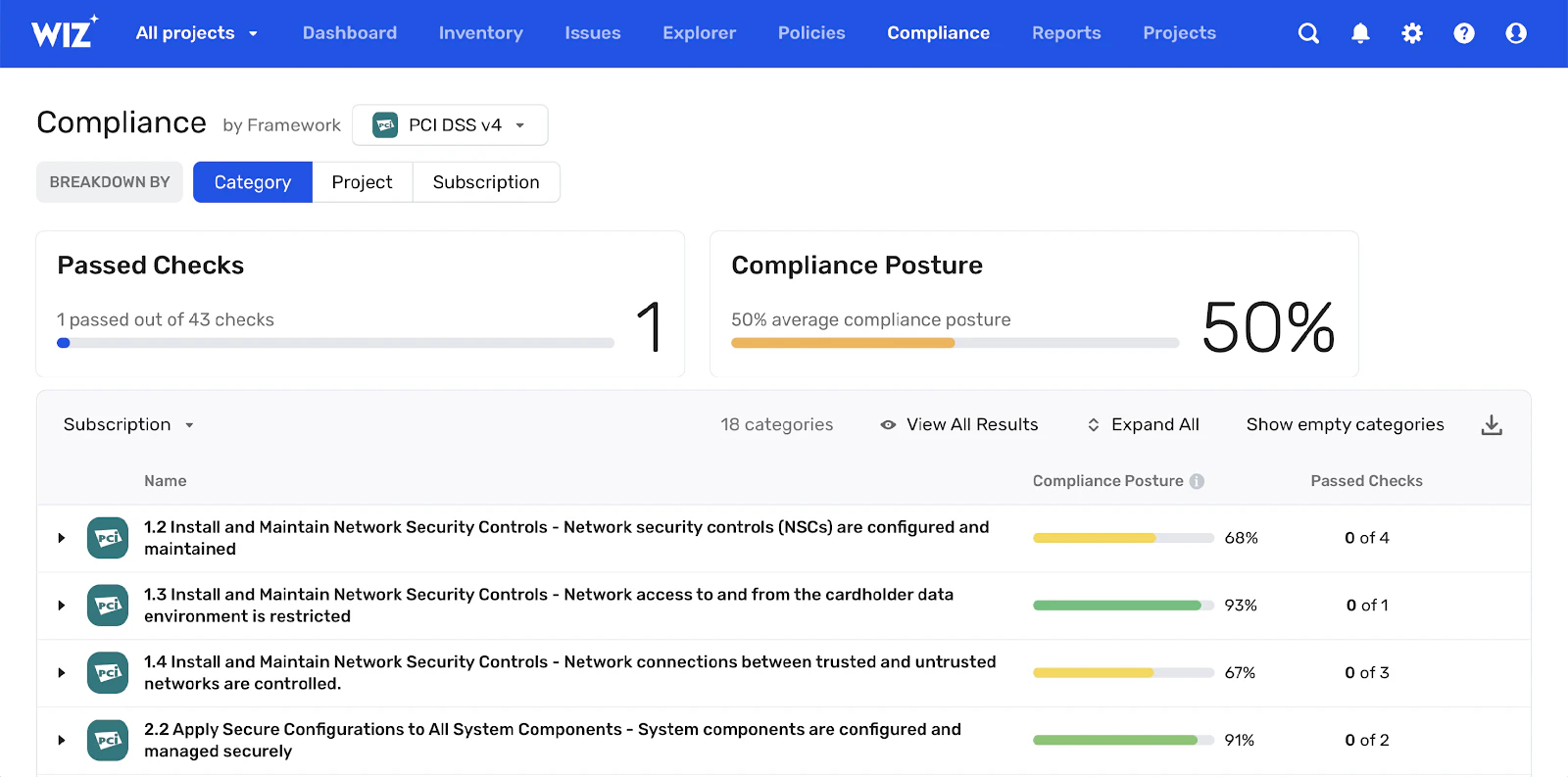
The compliance challenges described above all share a common thread: they grow worse when visibility is limited and ownership is unclear. Continuous monitoring addresses both by maintaining real-time awareness of your cloud posture across providers, frameworks, and resource types. It surfaces drift the moment it occurs, correlates findings with the frameworks they violate, and routes alerts to the right owners.
DORA compliance in the cloud era illustrates how this changes the regulatory conversation. Rather than assembling point-in-time evidence, organizations with mature monitoring practices demonstrate persistent control effectiveness, which is exactly what regulators increasingly expect.
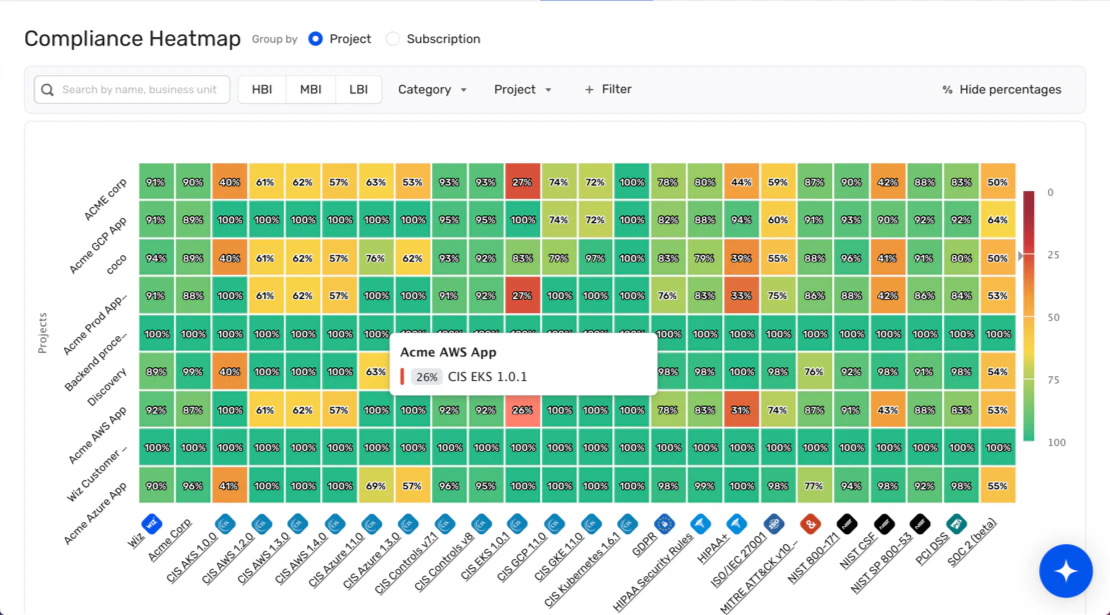
Wiz provides unified visibility across AWS, Azure, and Google Cloud, mapping your environment continuously against more than 100 frameworks, including NIST, HIPAA, SOC 2, PCI DSS, and FedRAMP. CloudSec teams work from a single view showing posture across all environments simultaneously, with findings mapped to the controls that need attention, rather than managing separate compliance tools per provider.
Get the free cloud security assessment for a fast, agentless picture of your current risk across frameworks and environments. Or, schedule a demo with Wiz to upgrade your cloud compliance and security posture in the face of new challenges and AI standards.
100+ Built-In Compliance Frameworks
See how Wiz eliminates the manual effort and complexity of achieving compliance in dynamic and multi-cloud environments.
